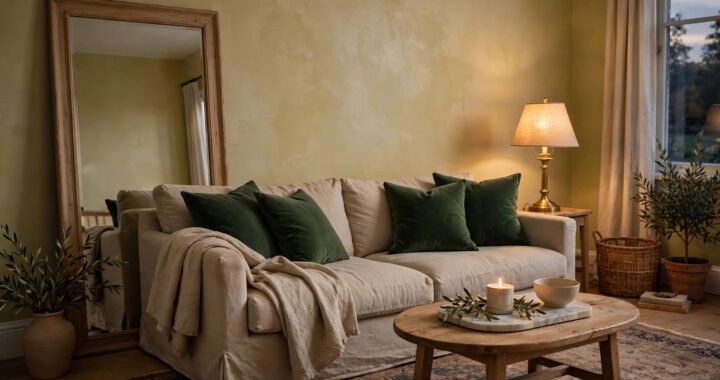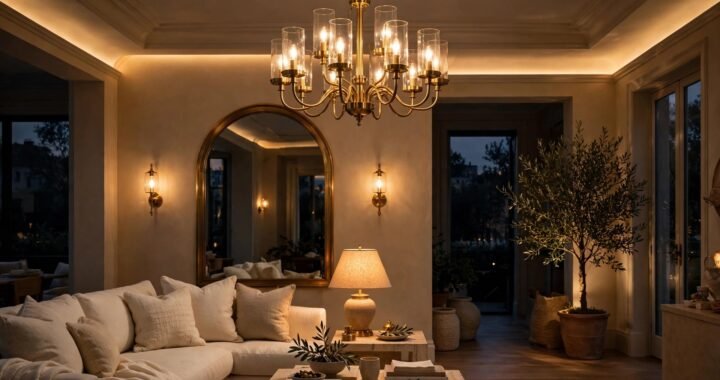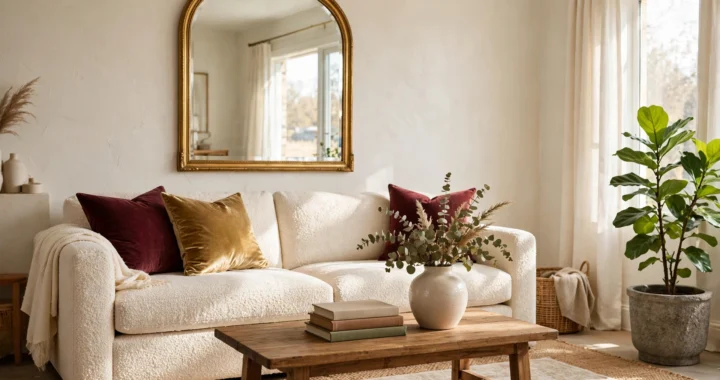
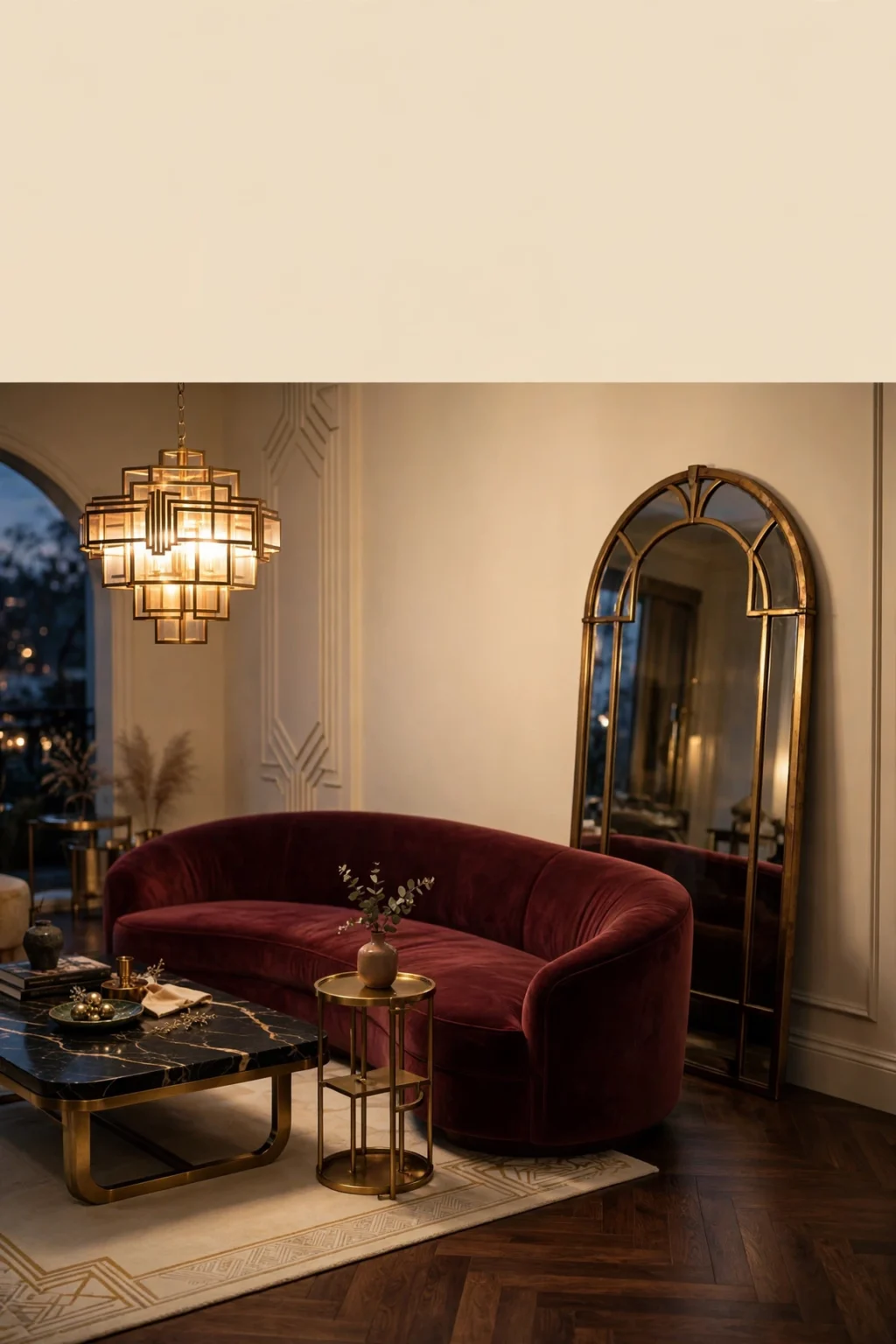
If the last few years of beige-on-beige minimalism left your home feeling a little flat, 2026 is your year. The biggest shift we are seeing in luxury home decor trends 2026 is a style called Neo Deco — a modern revival of 1920s Art Deco glamour, cleaned up for real, lived-in homes. Think geometric patterns instead of plain walls, warm brass instead of cold chrome, deep jewel tones instead of greige, and curves — arched mirrors, scalloped edges, fan shapes — everywhere you look.
Pinterest’s trend data backs this up: searches for the brass aesthetic, red marble and antique bar carts have all surged, and designers at this year’s Milan furniture fair showed the same ingredients — lacquer, velvet, brushed brass and bold geometry. The good news? Neo Deco is unusually forgiving. One strong piece — a mirror, a lamp, a velvet chair — can shift a whole room, so you do not need a full renovation to join in.
We have pulled together the 12 ideas that give you the most glamour per dollar, each with real prices, the sizes that actually work, and the mistakes to avoid. Pick two or three, layer them slowly, and your home will look collected and confident — never themed or costume-like.
How to Choose the Right Neo Deco Pieces for Your Home
Before you buy anything, run through these four checks. They take ten minutes and save most people from the two classic Neo Deco errors: buying too small, and buying everything at once.
1. Start with your metal. Pick one main finish — brushed brass is the 2026 default — and repeat it at least three times in a room (a lamp, a mirror frame, cabinet pulls). Mixed metals are fine, but keep the ratio roughly 70/30 so one finish clearly leads.
2. Measure before you fall in love. Deco pieces are sculptural, so scale matters more than usual. A mirror should be at least two-thirds the width of the console or vanity below it. A pendant over a dining table should be one-half to two-thirds the table’s width. Tape the outline on the wall or floor first — it takes two minutes and prevents most returns.
3. Choose one jewel tone, not five. Burgundy, emerald, sapphire and aubergine are all trending, but a room reads luxurious when one deep colour does the heavy lifting against warm neutrals. Repeat that colour three times — cushions, art, one chair — and stop.
4. Balance shine with softness. Brass, marble and lacquer are all hard, reflective surfaces. For every glossy piece, add something matte and tactile: velvet, wool, boucle or raw wood. That contrast is exactly what makes the look feel expensive rather than showroom-cold. If you want a full-room starting point, our guide to luxury living room ideas shows how these layers come together.
12 Neo Deco Ideas to Try in 2026
1. An Arched Mirror in Brushed Brass
The arched mirror is the single easiest Neo Deco upgrade. The soft arch echoes 1920s architecture, and the brass frame delivers the warm metallic glow the whole style is built on. Go big: a floor mirror 28–32 inches wide and 72–82 inches tall, leaned against the wall, makes a living room corner look intentional and bounces light into dark spots. Over a mantel or console, choose a mirror 30–40 inches wide.
Expect to pay $180–$450 for a good-quality metal-framed floor mirror, and $600–$1,200 for a solid, heavy designer piece with bevelled glass. Aluminium frames with a brass-look finish sit at the lower end; real brushed brass costs more but will not flake.
Practical tip: Lean, don’t hang, an oversized floor mirror — angle it slightly and it reflects the room instead of the ceiling. For placement tricks for every room, see our 12 luxury mirror ideas.
2. Burgundy Velvet Seating
If one colour defines Neo Deco, it is deep burgundy — rich, warm and far easier to live with than bright red. A single velvet accent chair (28–32 inches wide) or a pair of velvet cushions instantly gives a neutral sofa a glamorous anchor. Cotton velvet looks matte and classic; polyester velvet is more stain-resistant and slightly shinier.
A quality velvet accent chair runs $350–$900; a full three-seat velvet sofa is $1,800–$4,500. Cushion covers are the budget entry point at $25–$60 each for 20×20-inch covers with feather-blend inserts.
Practical tip: Velvet shows every touch, so brush it weekly with a clothes brush in one direction, and keep darker burgundy on seats — it hides shadows and crumbs far better than pale velvet.
3. Sculptural Lighting With Geometric Silhouettes
Lighting is where Neo Deco really performs. Look for tiered pendants, fan-shaped sconces and globe lights with stepped, geometric profiles in brass and opal glass. Hang a statement pendant 30–34 inches above a dining table, with the fixture one-half to two-thirds the table’s width. Wall sconces work best mounted 60–66 inches from the floor, flanking a mirror or artwork.
A pair of brass sconces costs $120–$380; a tiered statement pendant runs $300–$1,200 depending on size and whether the brass is solid or plated. Always choose warm bulbs — 2700K, dimmable — because cool white light kills the golden mood instantly.
Practical tip: Put every Deco light on a dimmer (about $15–$30 per switch). At 50% brightness the brass warms up and the whole room looks like evening in a boutique hotel.
4. Red Marble and Calacatta Viola Accents
Statement stone is having a serious moment, and the boldest choices for 2026 are red marble and Calacatta Viola — white stone shot through with dramatic purple and burgundy veining that pairs perfectly with jewel tones. You do not need a full slab wall. Start with a marble side table (16–20 inches diameter), a vanity tray, or a kitchen splashback section.
Real marble side tables cost $250–$700. A full-slab kitchen backsplash in Calacatta Viola runs $120–$250 per square foot installed, which is why most of our readers use it on an island front or a small powder-room wall instead. For bigger stone projects, our statement stone kitchen ideas break down the real numbers.
Practical tip: Marble is porous — seal it every 6–12 months with a penetrating sealer ($20–$35 a bottle) and wipe red wine and lemon immediately. Honed finishes hide etching better than polished.
5. Geometric Patterns on Rugs, Tiles and Textiles
Deco geometry — fans, chevrons, sunbursts, stepped borders — is the pattern language of the trend. The safest place to use it is underfoot: a rug with a subtle geometric border anchors a seating area without overwhelming it. Size up: a living room rug should be at least 8×10 feet so the front legs of all seating sit on it.
Wool geometric rugs cost $400–$1,500 for an 8×10; flatweave cotton versions start around $150. If you are renovating, fan-shaped (fish-scale) tiles make a stunning kitchen or bathroom feature at $8–$18 per square foot for ceramic, more for marble mosaic.
Practical tip: Use one geometric pattern per room at a large scale, then keep other patterns tiny or absent. Two competing bold patterns is the fastest route to a room that feels busy instead of glamorous.
6. An Antique-Style Bar Cart
Searches for antique bar carts have doubled, and it is easy to see why: a two-tier brass and glass cart is sculpture, storage and party trick in one 30-inch footprint. Standard carts are 28–34 inches long, 18 inches deep and 30–36 inches tall — small enough for a dining room corner or beside a sofa.
New brass-finish carts cost $150–$450; genuine vintage brass carts in good condition run $400–$1,000 at antique markets and estate sales. Check the wheels roll smoothly and the frame does not wobble — repairs eat the savings fast.
Practical tip: Style it in threes — one tall bottle group, one stack of books or a small plant, one bowl of lemons or a candle. And it does not need alcohol: a tea or coffee station version works beautifully in family homes.
7. Jewel-Tone Walls in One Bold Zone
You do not need to paint a whole room emerald. Neo Deco colour works best in one defined zone: the wall behind a bed, a reading nook, inside a dining alcove, or the lower half of a hallway with a chair rail at 36 inches. Deep green, aubergine and midnight blue all make brass and cream furnishings glow.
Quality paint costs $45–$75 per gallon, and one accent wall (roughly 120 square feet) usually needs just one gallon plus primer — call it $80–$130 total with rollers and tape. Dark colours often need two to three coats, so buy the better paint; cheap dark paint streaks.
Practical tip: Test with a 12×12-inch peel-and-stick sample and check it morning and evening. Jewel tones deepen at night under warm lighting — exactly the effect you want, but confirm before committing. This approach transforms bedrooms too, as we show in our warm modern bedroom ideas.
8. Fluted and Reeded Details
Fluting — those fine vertical grooves on 1920s columns and cocktail cabinets — is back on sideboards, kitchen islands, bedside tables and even glass. It adds texture and shadow lines without colour, so it suits anyone nervous about going bold. A fluted sideboard 55–70 inches wide is the hero piece; fluted glass works in cabinet doors and shower screens.
Fluted bedside tables cost $180–$450 each; a solid oak fluted sideboard runs $900–$2,400. DIY-friendly fluted wall panels cost $60–$120 per 8-foot panel and can wrap a plain island or headboard wall in a weekend.
Practical tip: Flutes collect dust. A soft bottle brush or the brush attachment on a vacuum cleans them in seconds — do it monthly and the grooves stay crisp and shadowy instead of grey.
9. Lacquered Furniture in Deep Glossy Colour
High-gloss lacquer in black, deep green or burgundy is pure Deco confidence. One lacquered piece — a console, a drinks cabinet, a pair of bedside tables — reflects light like a mirror and makes everything near it look richer. Consoles are typically 48–60 inches long and 12–16 inches deep, slim enough for hallways.
Expect $500–$1,400 for a well-made lacquered console, and $60–$120 in materials (primer, high-gloss paint, fine sandpaper) to lacquer a plain second-hand piece yourself. Real traditional lacquer is costly and specialist; modern catalysed lacquer and quality high-gloss paint give 90% of the look.
Practical tip: Lacquer shows fingerprints and scratches, so use felt pads under everything, coasters always, and keep a microfibre cloth in the drawer. Matte-black or very dark green hides wear best.
10. Statement Stone in the Bathroom — Travertine Meets Brass
Neo Deco bathrooms pair warm stone with unlacquered-look brass fittings. Travertine-look porcelain tiles give you the texture at a fraction of natural stone’s upkeep, while a red marble vanity top or a Viola marble basin becomes the jewel in the room. Keep tiles large — 24×48 inches — with minimal grout lines for a calm, expensive feel.
Porcelain stone-effect tiles cost $4–$10 per square foot; natural travertine is $8–$20. A stone vessel basin runs $200–$650, and brass taps $150–$450 each. Our guide to natural stone bathroom ideas covers which stones survive real family use.
Practical tip: If you choose real brass fittings, decide now whether you want them lacquered (stay shiny, zero upkeep) or unlacquered (develop a living patina). Both are correct — mixing the two in one room is not.
11. Curved Furniture and Scalloped Edges
Straight lines dominated minimalism; curves define 2026. Look for barrel chairs, curved sofa backs, round dining tables and scalloped headboards or mirrors. Curves soften all the geometry and shine in Neo Deco, and they improve flow — no sharp corners to catch a hip in a small room. A round dining table 44–54 inches across seats four to six comfortably with no one stuck on a corner.
Curved accent chairs cost $400–$1,100; a boucle curved sofa runs $1,600–$3,800. Scalloped mirrors and headboards start around $150–$350 and deliver the shape for far less.
Practical tip: One curve per sightline is enough. A curved sofa plus a round table plus an arched mirror in a single view can tip from glamorous to theme-park — space them through the home instead.
12. Warm Layered Lighting and Metallic Finishing Touches
The final layer is what makes visitors say a room “feels expensive” without knowing why. Aim for three light levels in every room: overhead, task (reading lamps), and accent (picture lights, candlelight). Small brass picture lights over art — 14–24 inches wide, $60–$180 each — are the most underused luxury trick we know.
Then repeat your brass in the small things: cabinet pulls ($6–$18 each), switch plates, curtain tiebacks, a tray on the coffee table. These tiny repeats are what designers call the “thread” that pulls a room together. A full hardware refresh for a kitchen typically costs $150–$400 and takes one afternoon with a screwdriver.
Practical tip: Keep every bulb in a room the same colour temperature — mismatched warm and cool bulbs make even expensive decor look accidental. Buy bulbs in multipacks so replacements match.
Save vs Splurge: Where the Money Actually Shows
Splurge on: the mirror (cheap frames look thin and the glass distorts), the main light fixture, and one real stone piece. These are the items eyes land on first, and quality is visible from across the room.
Save on: cushion covers, bar cart styling, paint, cabinet hardware and vintage finds. A $30 velvet cushion cover over a good insert looks identical to a $120 one, and second-hand brass cleans up beautifully with a $8 tin of brass polish.
Common mistakes to avoid: buying a matching “Deco set” (the style should look collected over time, not ordered in one click); using cool white bulbs; choosing mini versions of statement pieces — a too-small mirror or rug instantly cheapens the room; and forgetting softness, so the space ends up shiny but uncomfortable.
Frequently Asked Questions
What exactly is Neo Deco decor?
Neo Deco is the 2026 revival of Art Deco style, updated for modern homes. It uses Art Deco’s signature ingredients — geometric patterns, arches, brass, marble and jewel tones — but with cleaner lines, fewer ornaments and more comfortable, practical furniture than the 1920s originals.
Is Neo Deco expensive to do?
It can start very cheaply. Paint ($80–$130 for an accent wall), velvet cushion covers and one brass-framed mirror can transform a room for under $400. The expensive version — real marble, solid brass, lacquered furniture — is entirely optional and can be added piece by piece.
Which colours work best with the brass aesthetic?
Burgundy, emerald green, midnight blue and aubergine are the strongest partners for brass, followed by warm neutrals like cream, camel and walnut brown. Avoid pairing brass with cool grey — the warmth of the metal clashes with blue-grey tones and both look off.
Can Neo Deco work in a small apartment?
Yes — arguably better than in a big house, because the style is about impact pieces, not quantity. One arched mirror, a small bar cart and jewel-tone cushions give a studio a glamorous focal point, and mirrors genuinely make small rooms feel larger.
Does Neo Deco mix with the furniture I already own?
Almost always. Neutral sofas, wooden tables and plain rugs are the perfect base. Add Deco through lighting, mirrors, textiles and one curved or velvet piece, and existing furniture simply reads as the calm background that lets the new pieces shine.
Will this trend date quickly?
The underlying ingredients — brass, marble, velvet, arches — are classics that cycle back every decade, and Art Deco is now a century old. Choose quality basics in these materials and avoid novelty items shaped like literal sunbursts or skyscrapers, and your room will age gracefully even as trend labels change.
Conclusion
Luxury in 2026 is not about filling a room — it is about choosing a few glamorous, well-made pieces and letting them work hard. Start with the highest-impact move for your space: an arched brass mirror if your room feels dark, burgundy velvet if it feels cold, sculptural warm lighting if it feels flat. Add geometry and stone slowly, repeat your brass quietly in the small details, and keep everything soft somewhere.
That is the real secret of Neo Deco, and honestly of all good decorating: contrast, confidence and patience. We will keep updating this guide as the year’s trends develop — and we would love to hear which idea you try first.
— Hamza, Luxury House Ideas