
Introduction
Ask a designer for the single fastest way to make a room look expensive and most will not say the sofa or the chandelier — they will say the windows. Bare or badly dressed windows flatten a room no matter what else is in it, while properly treated windows do three expensive things at once: they add height, they add softness, and they frame the light the whole room runs on.
The good news is that the difference between budget curtains and designer drapery is rarely money — it is method. The same ready-made panels read cheap at the wrong rod height and luxurious at the right one. This guide gives you the 12 moves designers actually use on window treatments: the fabrics that photograph expensive, the measurements that make ceilings feel taller, the hardware that reads custom, and the mistakes that undo everything. Every idea comes with real costs, because luxury without a price tag is just daydreaming.
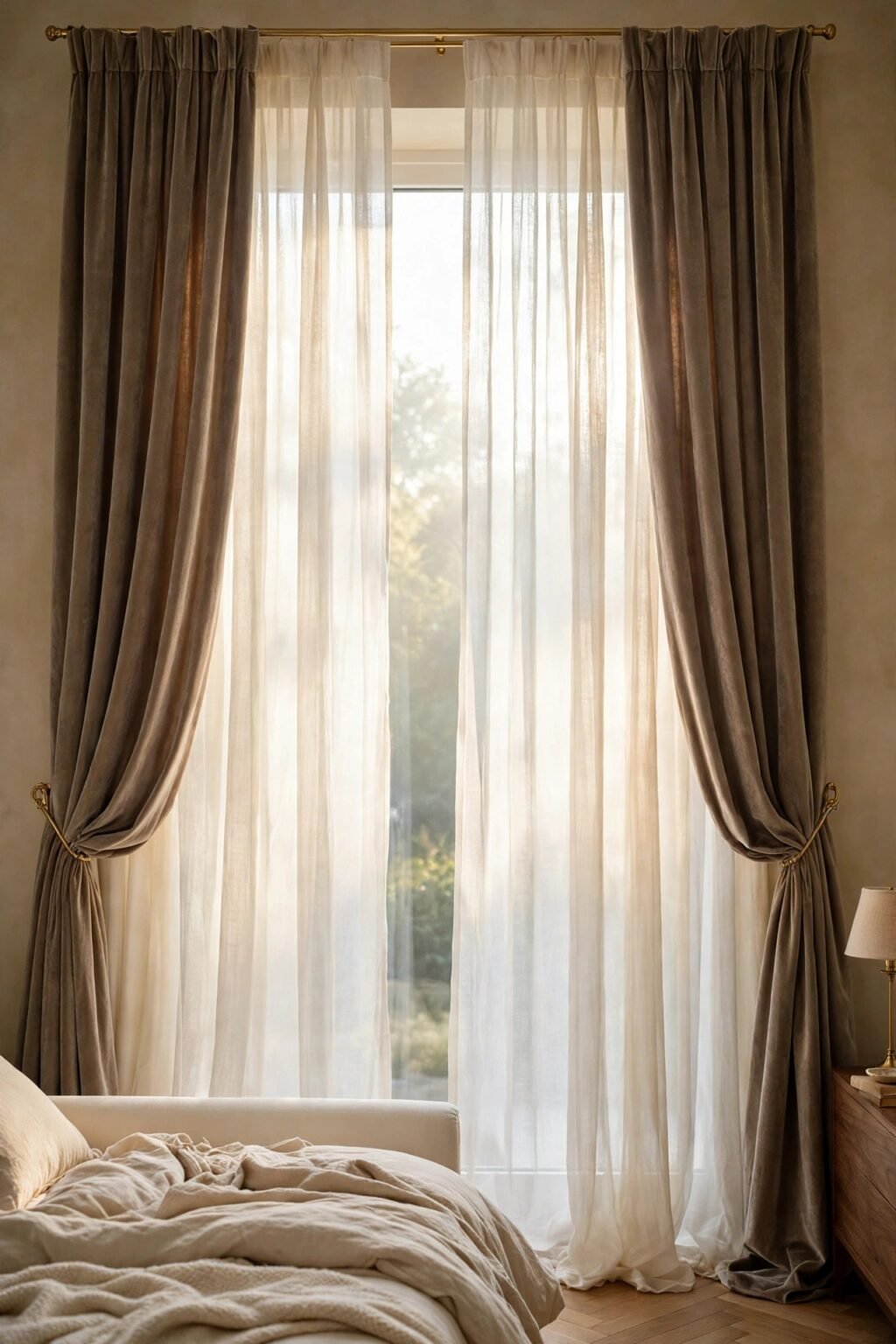
The Drapery Rulebook: What Makes Curtains Look Expensive
Before the ideas, the four rules behind every luxurious window you have ever admired:
- Height first. Mounting rods high is what makes rooms feel tall and curtains look intentional. Low rods are the single most common curtain mistake in the world.
- Fullness second. Skimpy fabric reads budget instantly. Real drapery looks gathered and generous, never stretched thin.
- Fabric third. Texture photographs as luxury — velvet, linen, silk-look blends. Thin, shiny synthetics photograph as exactly what they are.
- Length last. The hem is the signature. Floating panels scream “bought off the shelf”; kissing or puddling the floor reads “measured for this room.”
Keep these four in mind — every idea below obeys them.
1. Hang Them High and Wide: The Foundation Move
Everything else in this guide is decoration on this one rule. Mount the rod 4–6 inches below the ceiling (not at the window frame) and extend it 8–12 inches beyond the window on each side. The panels then cover wall, not glass — so the window looks bigger, the ceiling feels taller, and the curtains frame the view instead of blocking it.
Cost: nothing beyond a $20–$35 metal rod with finials. The effect is worth more than any fabric upgrade in this guide. If your current curtains look underwhelming, do this one change before buying anything new.
Designer tip: In rooms with 8-foot ceilings, mounting at 6 inches below the ceiling plus floor-length panels adds roughly a perceived foot of height. It is the cheapest optical illusion in decorating.
2. Double Up: Sheers Behind Drapes
The layered window treatment — sheer panels on an inner rod, heavier drapes on the outer — is the reason hotel suites and designer bedrooms photograph so well. Sheers filter daylight into a soft glow during the day; the drapes close at night for privacy and drama. Together they read as depth, which the eye interprets as luxury.
How to do it: Use a double rod set ($25–$55) or two slim tension rods. Sheers in white or ivory voile cost $10–$25 per 84-inch panel; the drapes in front follow all the rules in this guide. This is also the treatment behind our sage velvet look — see how textiles layer through a whole room in our warm modern bedroom guide.
3. Velvet Drapes for Instant Opulence
Velvet is the fastest fabric route to a luxury look: it catches light in folds, adds weight and acoustic softness, and forgives uneven walls. Sage green velvet is the current darling (Pinterest searches for sage-and-cream interiors are up over 400%), with aubergine, emerald and chocolate close behind.
Budget $30–$80 per panel for quality velvet-look ready-mades (108 inches, 54 inches wide); genuine cotton velvet custom panels run $150–$400 per panel. Steer velvet toward bedrooms, dining rooms and living rooms — anywhere you want evening glamour. And hang velvet panels with pinch pleats, not grommets: the pleats showcase the fabric’s folds.
Care note: Velvet crushes in transit. Steam panels after hanging ($0 with a garment steamer) and let them settle 48 hours before judging the look.
4. Belgian Linen for Quiet Luxury
If velvet is evening, linen is morning: the fabric of the “quiet luxury” interiors all over current design feeds. Its slubbed texture and soft drape read as understated money, and it works in every room from kitchen nooks to master suites.
True Belgian linen custom drapes cost $200–$500 per panel, but convincing linen-look blends (linen/cotton or linen/polyester) sell ready-made for $25–$60 per panel and fool everyone from three feet away. Choose natural flax, oatmeal or warm white — dyed linens fade unevenly in strong sun.
5. Pinch-Pleat Headers: The Custom Look for $0
The header — the top of the curtain — decides whether panels look bespoke or off-the-shelf. Pinch pleats (two or three-finger) are the designer default: structured, tailored, unmistakably custom. Grommet tops read casual and modern-farmhouse; rod pockets bunch and sag; tab tops read country.
Many ready-made pinch-pleat panels exist ($40–$90 per panel), and most pinch-pleat panels come with drapery hooks that ride on rings — buy clip rings ($12–$20 for a pack of 14) and hang them so the pleats face forward. The same fabric, different header, double the perceived value.
6. Double Rods: Two Layers, One Window
A double rod lets you run sheers and drapes independently — open the drapes by day for the filtered glow, close everything at night. Beyond function, the two-layer stack at the window’s sides looks thick and intentional, which is exactly what “expensive” windows are.
Measurements: Space the two rods 3–4 inches apart (brackets come in the set). The inner sheer rod can sit 2–3 inches lower without anyone noticing. Full sets run $25–$55 in brass, matte black or brushed nickel finishes — match your room’s metal story, not the window’s.
7. Get the Length Right: Kiss, Don’t Hover
Curtains should kiss the floor (hem just brushing it) or puddle slightly (1–3 inches of extra fabric pooling) in formal rooms. What they must never do is hover an inch or two above the floor — that reads as a measuring error, and it is the most common budget tell in the book.
How to measure: Measure from the rod (where the rings hang) to the floor, add the header allowance, and buy the next standard length up — 84″, 95″, 96″, 108″ — then hem. A $15–$25 tailor hemming job beats buying new panels, and iron-on hem tape ($5) works for a season. For puddling velvet in a formal living or dining room, add 2–3 inches deliberately; everywhere else, kiss.
8. Statement Hardware: Brass Rods & Finials
The rod is jewelry for the window — and it is seen up close. A 1-inch diameter rod in brushed brass, matte black or aged bronze reads designer; thin white or shiny silver tension rods read rental. Finials (the end caps) matter more than people expect: simple ball, faceted, or fluted designs in a matching metal finish complete the look.
Budget $25–$60 per window for a quality 48–120 inch adjustable rod set with finials; solid brass rods run $80–$200. Extend finials 3–4 inches past the brackets so the rod’s ends feel finished, not cut off.
9. Pattern Play: Prints That Read Expensive
Solid curtains are safe, but pattern is where windows become the room’s signature. The prints that read luxury right now: botanical and chinoiserie (timeless, pairs with everything), wide stripes (adds height, very current), geometric Art Deco motifs (perfect for Neo Deco rooms), and block-print style florals (handmade feel).
The rule: one patterned element per sightline. If the curtains are patterned, keep the rug and upholstery quiet. Large-scale prints suit large rooms; small prints suit small rooms — scale the pattern to the space, not the trend. Quality printed linen-blend panels run $45–$110 per panel.
10. Motorized Drapery: The Quiet Flex
Nothing signals “this house is finished” like curtains that open with a button. Motorized tracks ($150–$400 per window for retrofit kits, or $500–$1,200 professionally installed) integrate with smart-home systems and solve the heavy-velvet problem — big panels that no one wants to wrestle with daily.
The affordable route: battery-operated retrofit motors that fit standard tracks ($80–$180 per window), controlled by remote or phone app. Install the track first, hang the drapes second — and keep one manual pull cord for power outages.
11. Blackout, Done the Luxury Way
Bedrooms need darkness, but the cheap route — white plastic blackout liners that show at the edges — ruins the drapery look. The luxury approach: sewn-in blackout lining in a color matching the face fabric, so panels look identical open or closed.
Ready-made blackout velvet or triple-weave panels run $35–$90 per panel; having lining sewn into custom panels adds $40–$80 per panel at a drapery workroom. For existing curtains, clip-on blackout liners ($15–$30 per panel) work if you choose them in the same tone as the drapes — never bright white behind dark fabric. Pair with the layered-lighting thinking from our lighting guide for a bedroom that is bright by day and cave-dark by night.
12. The Finishing Touches: Tiebacks, Bands & Trim
The last 5% is what separates styled windows from hung fabric. Tiebacks in the curtain’s own fabric or in brass holdbacks ($15–$40 per pair) shape the drape into elegant sweeps. Trim — a 2-inch Greek key or tape border down the leading edge — is the classic custom detail, and iron-on trim tape ($8–$15 per roll) fakes it convincingly on ready-mades.
Placement: holdbacks sit at roughly one-third of the panel’s height from the floor — never at the middle, which looks like a ponytail. And steam every panel after hanging: wrinkles are the difference between a $40 panel and a $400 one in photographs.
Frequently Asked Questions
How many curtain panels do I need per window?
Two panels per side minimum — four total for a standard window. Panels should total 1.5 to 2 times the rod width when closed flat. Skimpy fullness is the fastest way to make expensive fabric look cheap, so buy the extra panel; it is the highest-ROI curtain upgrade there is.
Which curtain fabric looks most luxurious?
Velvet for drama and evening rooms, linen or linen-blend for daytime quiet luxury, silk-look (faux silk) for formal dining rooms. The common thread is texture and weight — fabrics that fold, gather and catch light. Thin, shiny polyester is the one fabric that never looks expensive, whatever the price tag claims.
Should curtains touch the floor?
Yes — they should kiss the floor or puddle 1–3 inches in formal spaces. Hovering above the floor is the most common curtain mistake and reads instantly as off-the-shelf. Measure from the hanging point, buy the next standard length up, and hem to fit.
How wide should my curtain rod be?
The rod should extend 8–12 inches beyond the window frame on each side, so open curtains stack on the wall rather than covering the glass. For a 36-inch window, that means a rod roughly 60–72 inches wide including finials.
Are double curtain rods worth it?
Yes, if the room faces east or west sun or needs day privacy — sheers by day, drapes by night, independently controlled. For north-facing rooms or rooms where you never close the curtains, a single rod with full drapes is enough.
Final Thoughts
Luxury window treatments are not about the most expensive fabric — they are about the four rules: height, fullness, fabric, length. Mount the rod high and wide, buy the extra panel, choose a fabric with texture, and let the hem kiss the floor. Do those four things with ready-made panels and your windows will read as custom; skip them with custom drapes and the money is wasted.
Start with one room — the bedroom or living room, wherever the light matters most. Hang one window correctly and the rest of the house will start looking underdressed by comparison. That is how you know it worked.


[…] the look with the right window treatment — our guide to luxury curtains and drapery ideas covers the fabrics, measurements and real […]
[…] deserve the same attention as the furniture — see our luxury curtains and drapery ideas for designer window treatments with real […]