Introduction
Your bedroom should feel like a peaceful retreat where you can relax, recharge, and feel completely at home. But there is a meaningful difference between a bedroom that is simply decorated and one that feels genuinely luxurious. True luxury in bedroom design is not about filling the room with expensive furniture — the most successful interiors focus on proportion, material honesty, layered lighting, and sensory comfort. A sophisticated bedroom usually has a strong focal point, disciplined color palette, and details you notice on the second or third look: the weight of the curtains, the warmth of the light at night, the feel of real linen. Below are 25 luxury bedroom decor ideas covering beds, lighting, materials, layouts, and finishing touches, each with practical specifics you can actually act on.
1. Choose an Elegant Statement Bed
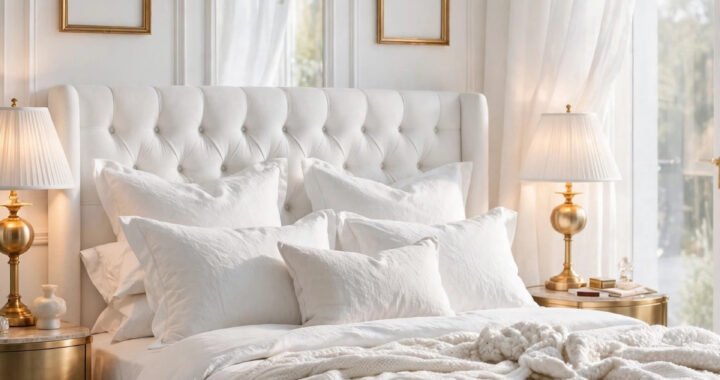
The bed is the visual anchor of the room, so give it presence. Look for an upholstered frame with a headboard at least 130–150 cm tall — anything shorter disappears against the wall. Wingback and channel-tufted profiles read as the most luxurious. Expect to spend $800–$2,500 for a quality king-size upholstered frame; below that range, check that the headboard is padded rather than a flat board wrapped in thin fabric. A common mistake is choosing a bed that is too small for the room — in a master bedroom over 14 m², a king bed almost always looks more intentional than a queen.
2. Use a Neutral Luxury Color Palette
Neutral palettes photograph beautifully and age gracefully because they never fight your textiles. Build yours in layers: warm white walls, oatmeal or greige bedding, then one deeper tone — taupe, camel, or soft charcoal — for contrast. Keep the palette to three or four tones maximum; more than that and the calm dissolves. Paint tip: sample at least three warm whites (avoid anything with a blue undertone) and view them at night under your actual bulbs before committing, since lighting shifts neutrals dramatically.
3. Add Beautiful Wall Paneling
Wall paneling is one of the highest-impact upgrades per dollar in a bedroom. Vertical fluted panels or simple shaker-style molding behind the bed create architecture where there was none. For a standard 3.6 m wall, budget $400–$1,200 for MDF paneling installed, or under $150 if you DIY with pre-cut molding strips and paint. Paint the paneling the same color as the wall for a seamless, expensive look — contrasting colors chop the wall up and cheapen the effect. Keep panel profiles slim; chunky molding belongs to traditional living rooms, not serene bedrooms.
4. Install Statement Lighting: Jewelry for Your Luxury Bedroom Decor
Overhead lighting should be jewelry, not an afterthought. A sculptural pendant or small chandelier hung 210–220 cm above the floor (so it clears sightlines but stays intimate) transforms the room’s evening mood. Size rule: add the room’s length and width in meters, multiply by 8, and you get a good fixture diameter in centimeters — a 4×5 m room wants roughly a 70 cm fixture. Always put statement lights on dimmers and use 2700K warm bulbs; a beautiful fixture on harsh cool light still feels cheap.
5. Layer High-Quality Bedding
Luxury bedding is about layers, not thread count alone. Start with long-staple cotton or linen sheets (400–600 thread count is the sweet spot; above 800 is often marketing), add a mid-weight duvet, then finish with a coverlet or throw and sleeping pillows plus two euros. Wash new linen 2–3 times before judging it — it softens dramatically. The most common mistake is a flat, single-layer bed; even a $60 chunky knit throw draped with intention makes a $200 bedding set look like $800.
6. Add an Upholstered Bench
A bench at the foot of the bed adds both function and a finished, hotel-like composition. Choose one 10–15 cm narrower than the bed frame on each side so it doesn’t overhang, and keep the height at or just below the top of the mattress. Velvet, boucle, or textured linen in a tone pulled from your palette works best. Budget $250–$700 for solid construction — wobbly legs ruin the illusion instantly. Beyond looks, it is genuinely useful: a landing spot for tomorrow’s clothes that keeps the bed itself pristine.
7. Use Large Area Rugs
Nothing shrinks a bedroom faster than a postage-stamp rug. For a king bed, use at least 2.7×3.6 m, positioned so it extends 60–90 cm beyond each side and the foot of the bed — your feet should land on rug, not cold floor. Low-pile wool or wool-blend rugs wear best and feel substantial; avoid thin polyester rugs that ripple and curl within months. If budget is tight, layer a large natural jute rug ($150–$300) under a smaller vintage-style rug for a collected, high-end look at half the price.
8. Bring in Natural Materials
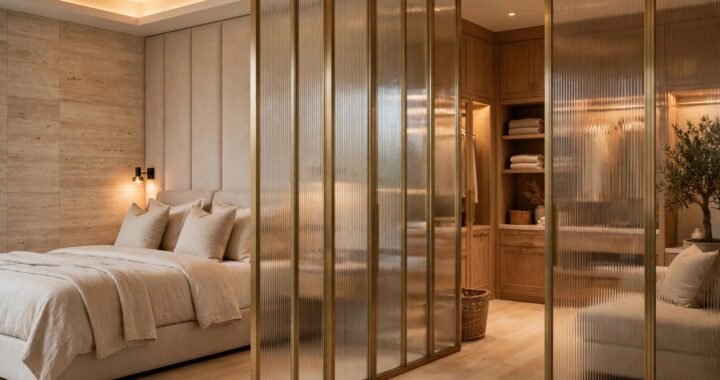
Natural materials are what separate warm, inviting luxury from cold showroom modernism. Introduce at least three: white oak or walnut (furniture), travertine or marble (a side table or tray), and linen or wool (textiles). Each brings subtle color variation that manufactured materials cannot fake. A solid oak nightstand, a travertine catch-all tray, and linen curtains together cost less than one designer chair but do more for the room’s perceived quality. Avoid mixing more than one wood tone — pick oak or walnut and commit.
9. Add Gold or Brass Accents
Brass and brushed gold add warmth and a jewelry-like finish, but restraint is everything. Limit metallics to one finish throughout the room — brushed brass is the most versatile — and repeat it in 3–5 places: lamp bases, mirror frame, curtain rod, drawer pulls. Mixed metals (chrome plus gold plus black) read as indecisive. Unlacquered brass develops a patina over time, which many designers prefer; if you want it to stay bright, choose lacquered. Small swaps like $20 brass drawer pulls can transform existing furniture.
10. Create a Comfortable Seating Area
If your bedroom exceeds 16 m², a dedicated seating area turns it from a sleeping room into a private suite. Two accent chairs angled toward each other with a small side table between them creates a genuine conversation corner; a single chaise under the window makes a reading retreat. Keep seating upholstery in the room’s palette and add one contrasting texture — a leather chair against linen bedding, for example. Leave at least 75 cm of walkway around the grouping so it feels intentional, not crammed.
11. Use Floor-to-Ceiling Curtains
Curtains hung at ceiling height make windows — and rooms — look significantly larger. Mount the rod 10–15 cm below the ceiling and 15–20 cm wider than the window frame on each side, so the panels stack off the glass and never block light when open. Choose double-width panels for proper fullness; skimpy single-width curtains look cheap regardless of fabric. For bedrooms, add blackout lining behind decorative linen — you get soft filtered daylight by day and true darkness at night, which is non-negotiable for sleep quality.
12. Introduce Statement Artwork
One large piece of real art beats a gallery wall of small prints in a luxury bedroom. Go big: art should span roughly two-thirds the width of the furniture below it — about 120–150 cm wide above a king bed. Abstract landscapes in your palette’s tones are the safest choice; avoid generic hotel-style prints. Local artists and quality giclée prints ($150–$600 framed) give you originality without gallery prices. Hang the center at 145–155 cm from the floor, and light it with a slim picture light for evening drama.
13. Add Mirrors for Light and Depth
Mirrors double both light and perceived space, but placement matters more than size. A tall arched or rectangular floor mirror (at least 170 cm) leaned against the wall opposite or adjacent to a window bounces daylight deep into the room. Avoid placing mirrors where they reflect clutter or the bed head-on — many people find a reflected bed unsettling at night. A brass-framed mirror also doubles as your metallic accent. Keep the glass clean; smudged mirrors instantly downgrade the effect they were meant to create.
14. Keep Nightstands Stylish and Balanced
Nightstands should be 5–10 cm above or level with the top of your mattress for comfortable reach — measure before buying. Matching pairs create calm symmetry, but deliberate asymmetry (a travertine cube on one side, a small wooden table on the other) looks more designed. Style each with restraint: a lamp, one book or a small tray, and a single decorative object. Corral small items on a tray so surfaces read as styled rather than cluttered. Clear nightstands are one of the fastest visual upgrades in any bedroom.
15. Use Soft Textures: the Secret Behind Rich Luxury Bedroom Decor
Texture is what makes neutrals interesting. Aim for at least four distinct textures in every sightline: smooth (lacquered tray), nubby (boucle), soft (velvet cushion), and organic (wool throw or jute). This layering is why designer rooms photograph so richly even in beige. The mistake to avoid is “flat beige” — same color, same smooth finish everywhere, which reads as unfinished rather than minimal. Touch everything as you shop; if a fabric doesn’t feel good in your hand, it won’t feel luxurious in the room.
16. Embrace Modern Dark Tones
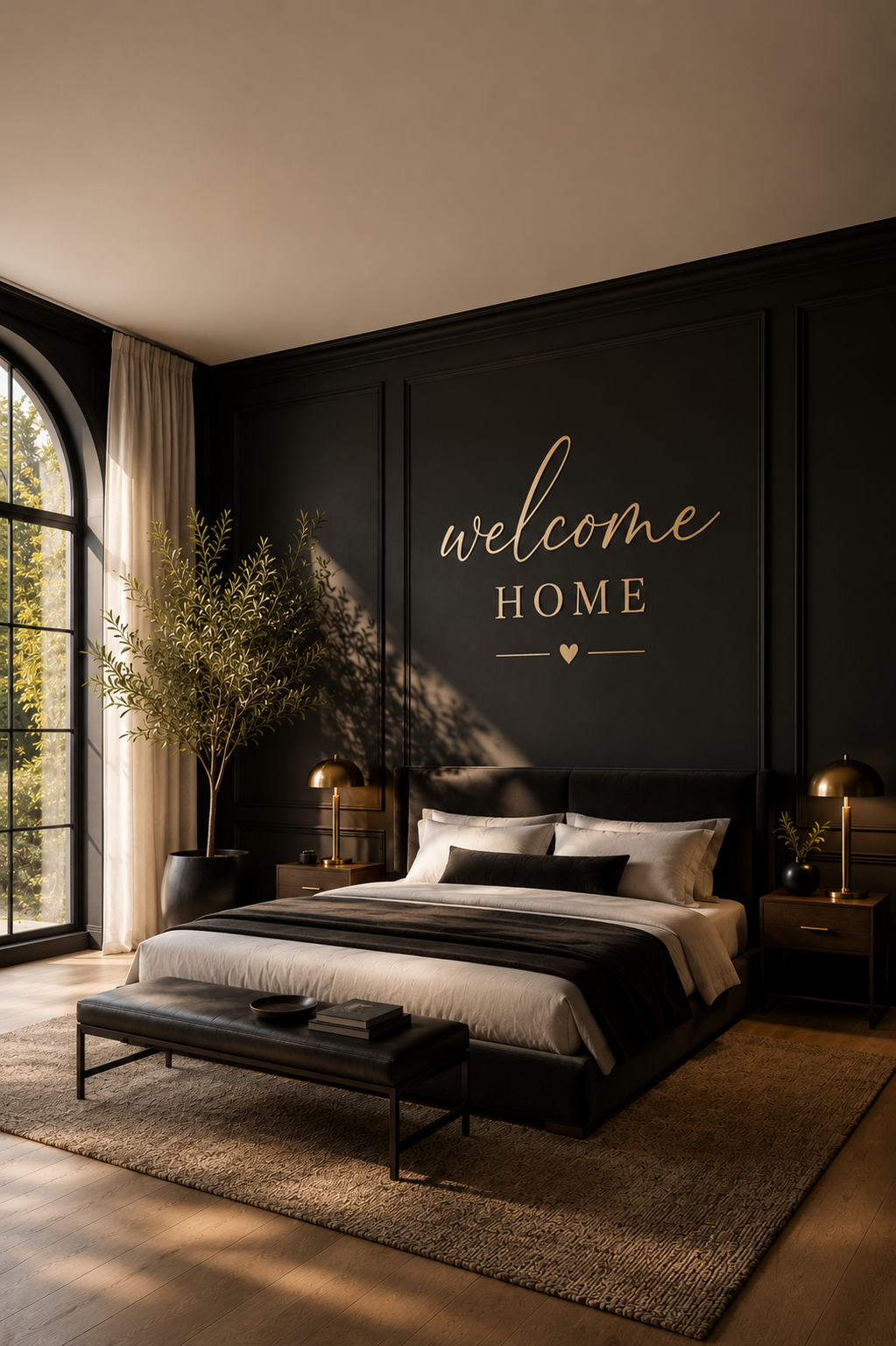
Dark bedrooms feel cocooning and undeniably luxurious when done with conviction — half-measures look muddy. If you go dark, commit: deep charcoal, espresso, or midnight navy on walls, with warm 2700K lighting to keep it inviting. Dark rooms need more light sources, not fewer — plan for at least four (overhead, two bedside, one accent). Keep ceilings and trim a shade lighter than walls to avoid a cave effect. Deep blue paired with brass is the classic luxury combination; charcoal with cognac leather runs a close second.
17. Add Indoor Plants
A single sculptural plant adds life and softness that no object can. Olive trees, fiddle-leaf figs, and large monsteras suit luxury bedrooms best — one statement plant beats five small pots. Place it in a weighted ceramic or stone planter (never the nursery pot) at least 30 cm in diameter so it looks intentional. If natural light is limited, a high-quality faux olive tree is an honest compromise; cheap plastic plants are worse than no plants. Wipe leaves monthly — dusty plants read as neglected, not lush.
18. Choose Minimal Yet Elegant Decor
Luxury whispers. Edit every surface to 3–5 objects maximum, and make each one earn its place: beautiful, useful, or meaningful — ideally two of the three. Corral smaller items on trays, which turn clutter into composition. The “one in, one out” rule keeps surfaces calm over time. This doesn’t mean stark: a styled dresser with a vase, a stack of two art books, and a candle is minimal yet warm. If a surface stresses you when you look at it, remove half the objects and reassess.
19. Create a Custom Wardrobe Wall
A floor-to-ceiling wardrobe wall in the bedroom’s palette looks like custom millwork at a fraction of the price. Use full-height doors (no horizontal breaks), push-to-open or slim brass handles, and paint it the exact wall color so it reads as architecture rather than furniture. Inside, invest in the fittings: pull-down rails, velvet-lined drawers, and motion-sensor LED strips ($15–$30 each) make even an IKEA PAX system feel bespoke. Keep the top 30 cm for out-of-season storage so daily items stay at comfortable reach.
20. Use Marble Details
You don’t need marble everywhere — a little reads as more. A marble tray on the dresser, marble-topped nightstands, or a marble threshold detail delivers the veined, luminous quality at manageable cost. Honed finishes suit bedrooms better than polished; they’re softer to the eye and show fewer fingerprints. For tight budgets, a single large marble-look porcelain tile as a tray or a $40 marble catch-all gives the material’s presence. Seal natural marble annually in humid climates to prevent etching from perfumes and lotions.
21. Design Around Natural Light
Orient the room’s layout to its best light: the bed against the solid wall, seating near the window. Use sheer linen panels for daytime privacy that still glows, layered with blackout behind for night. Keep windowsills clear and glass clean — dirty windows can cut perceived light by 20% or more. If the room faces north or gets little sun, compensate with warmer wall tones and additional 2700K sources rather than fighting it with cool “daylight” bulbs, which feel clinical after dark.
22. Make Comfort a Priority
A bedroom that looks luxurious but sleeps poorly has failed. Invest in the sleep system first: a supportive mattress suited to your sleep position, pillows at the right loft (side sleepers need firmer, thicker pillows than back sleepers), and breathable natural-fiber bedding. Room temperature of 18–20°C and true darkness improve sleep more than any decor. Luxury hotels obsess over this hierarchy — mattress, pillows, blackout, quiet — and so should you. No amount of brass can compensate for a bad night’s sleep.
23. Keep the Design Cohesive
Cohesion is the invisible difference between expensive-looking and chaotic. Choose your palette, your metal finish, and your wood tone once, then repeat them in at least three places each — repetition is what makes choices look deliberate. Before buying anything new, hold it against the room’s existing pieces (a photo on your phone works). The most common cohesion killer is impulse buying: a “bargain” lamp in the wrong finish costs more in visual harmony than it saves in money.
24. Add a Personal Touch
The final layer of luxury is personality — rooms without it feel like showrooms. Display one or two genuinely personal pieces: framed travel photography, a stack of books you actually read, a textile from a meaningful trip. The key is curation, not accumulation: choose the single best object from each category and store the rest. Personal doesn’t mean cluttered — a lone vintage camera on a stack of art books says more about you than a shelf of souvenirs.
25. Focus on Quality Over Quantity in Your Luxury Bedroom Decor
One $600 armchair outlasts and outclasses three $200 ones, and the same math applies across the room. Prioritize spending on what you touch daily — mattress, bedding, seating, lighting — and economize on decorative objects, where thrifted and vintage pieces often have more character anyway. Check joinery, fabric weight, and hardware feel before buying; quality announces itself in the hand. A bedroom with five excellent pieces and calm empty space will always look more luxurious than one crowded with compromises.
Frequently Asked Questions
What are the best colors for a luxury bedroom?
Warm neutrals dominate luxury bedroom decor: warm white, oatmeal, taupe, greige, and camel, with depth from walnut, charcoal, or deep navy. Keep the palette to three or four tones and always sample paint under your actual evening lighting, since 2700K bulbs warm every color. Avoid blue-greys and stark cool whites, which fight warm textiles and brass accents.
How can I make a blue bedroom look luxurious?
Commit to a deep, saturated blue — navy or midnight — rather than pale blue, which reads as casual. Pair it with brushed brass, warm white bedding for contrast, and layered 2700K lighting to keep it inviting. Dark walls need more light sources, not fewer: plan at least four. A velvet navy headboard with brass sconces is the classic high-luxury formula.
What furniture should a luxury bedroom have?
The essentials are a statement upholstered bed, two nightstands at mattress height, layered lighting (overhead plus bedside), a large area rug, and full-height curtains. Beyond that, add a bench or seating area, one piece of real art, and a mirror. Every piece should be the best quality you can afford — five excellent pieces beat fifteen mediocre ones.
Is a TV suitable for a luxury bedroom?
It depends on your priorities. Designers often hide the TV inside a wardrobe, behind sliding art panels, or in a pop-up cabinet at the bed’s foot so the room stays serene when it’s off. If you watch nightly, a slim wall-mounted TV with all cables concealed is perfectly fine — just never let a glowing black rectangle dominate the room’s focal wall.
How important is lighting in luxury bedroom design?
It is the single most transformative element. Plan three layers — ambient (overhead/dimmer), task (bedside reading), and accent (picture lights, LED strips, candles) — all at 2700K warm white on dimmers. Good lighting makes modest furniture look expensive; bad lighting makes expensive furniture look flat. Budget 10–15% of your room budget for lighting alone.
Final Thoughts on These Luxury Bedroom Decor Ideas
A truly luxurious bedroom is built from decisions, not dollars: the right bed at the right scale, lighting in warm layers, honest natural materials, and the discipline to edit. Work through these 25 ideas and apply even half of them with conviction, and your bedroom will shift from merely decorated to genuinely restorative — which is exactly what great luxury bedroom decor ideas are for. Start with what you touch every day — the bed, the light, the textiles underfoot — and let the room grow calmer and richer from there.
Explore more: Luxury Kitchen Ideas · Luxury Living Room Ideas · Luxury Modern Washroom Ideas